Ola Friend
Ola Friend is an innovative smart terminal that combines AI and hardware, powered by Doubao AI to enable efficient information extraction and instant feedback.
In the Ola Friend project, we were not facing the question of “how to make the product look better,” but a more fundamental judgment: in the context of rapidly changing AI capabilities, what role should this product play in the user's life?
Centered on this judgment, we kept returning to a few core questions:
How can users understand what this product can do and why they need it at first glance, and be willing to approach it? In what situations will users use it? Is it a tool, an assistant, or something companionship-like? When the technical capabilities change, does this role still hold?
Therefore, in the exploration of Ola Friend, design began with a shared judgment of the product's role, usage scenarios, and brand context. We treated the product name as part of the identity, rather than expressing around the symbol itself.
Because for most users, AI itself is abstract. Technical capabilities cannot be perceived directly; if the design only emphasizes “intelligence” or “advancement,” it would instead increase the cost of understanding.
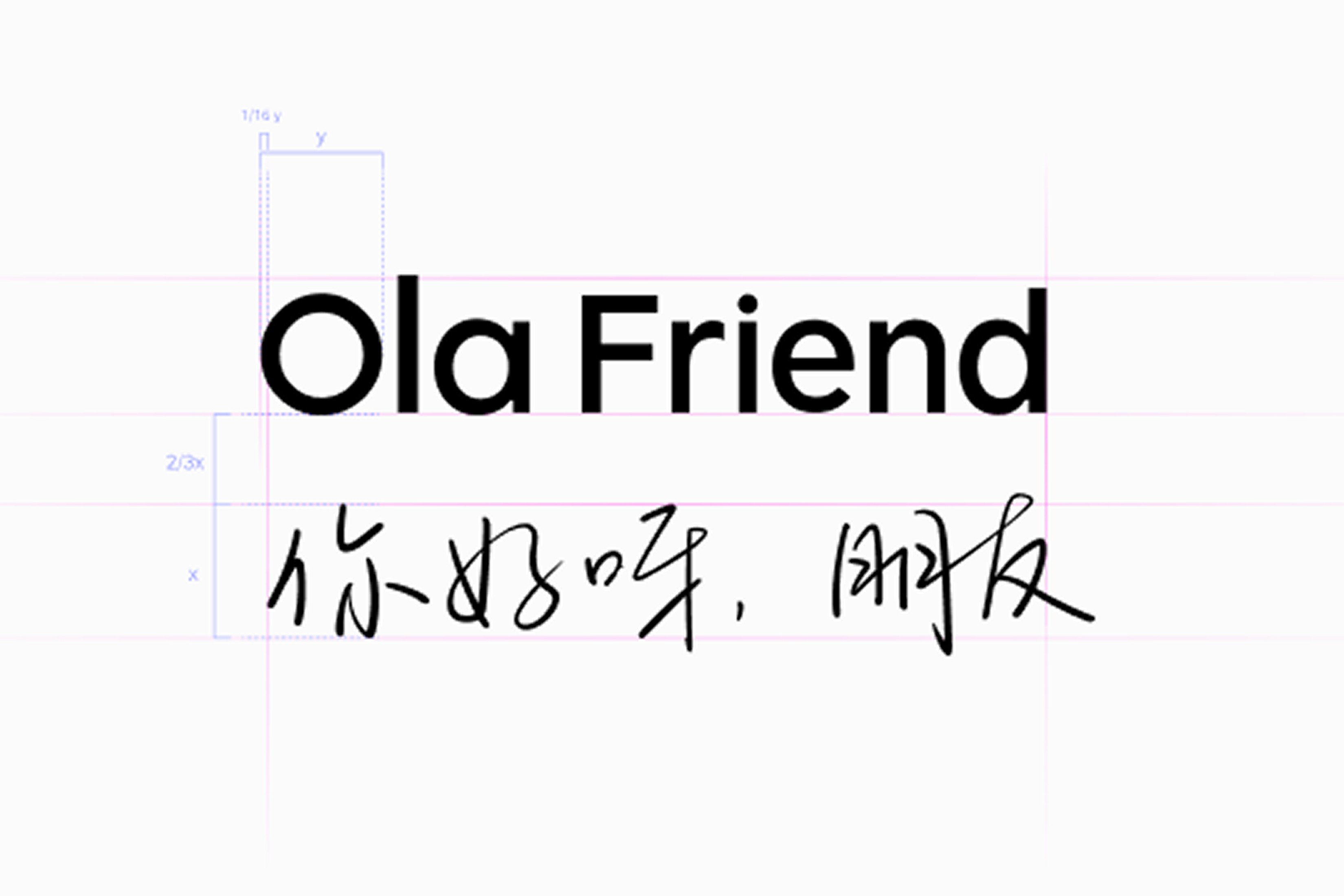
This judgment also extended into the brand language, in the slogan “Hello, friend.” We hoped that using a handwritten style—a more human and everyday form of expression—would reduce the distance created by technology.
Design at this stage was more like establishing a stable set of coordinates for all subsequent decisions.
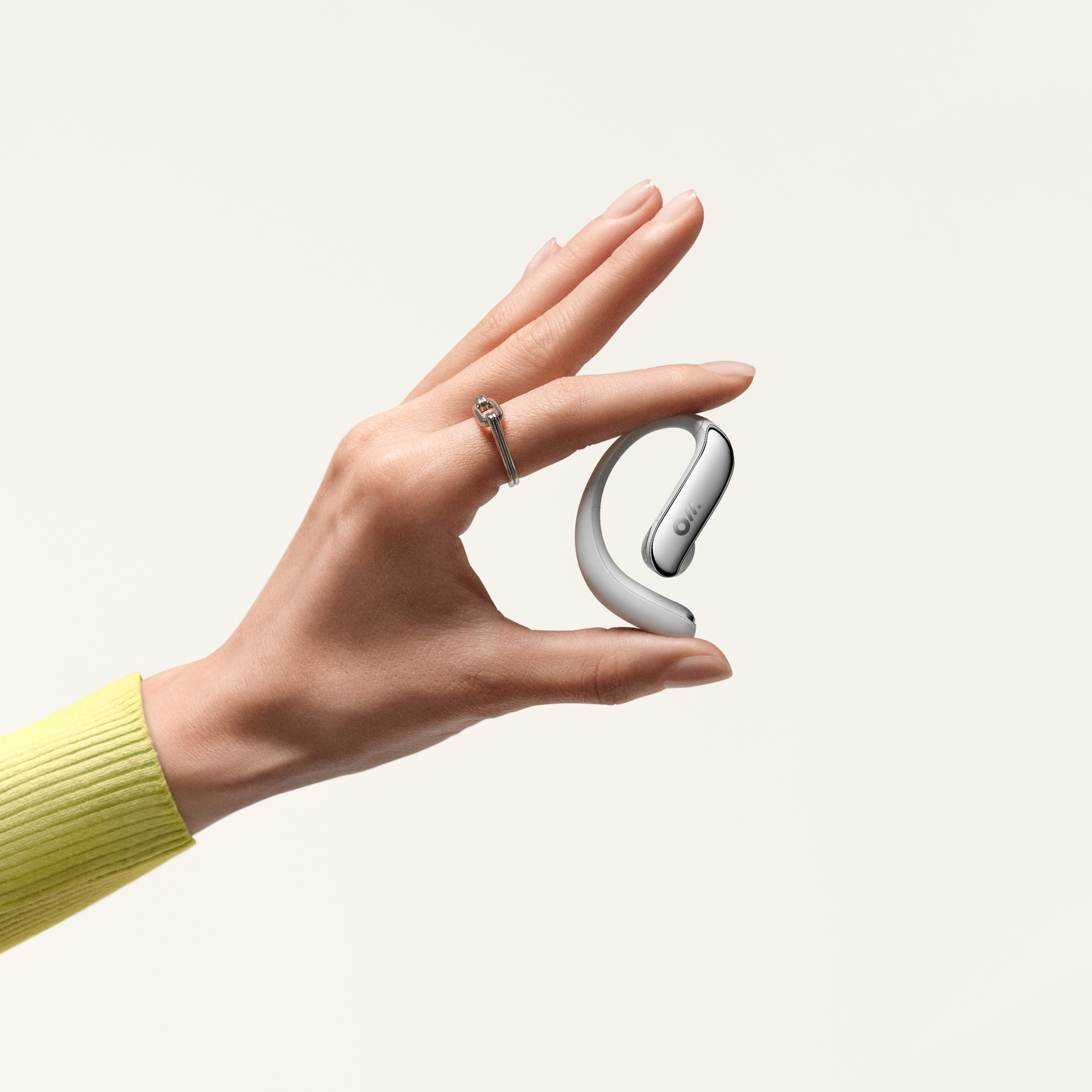
In the product's appearance, we were the first on the market to use a butterfly as a metaphor for an OWS headset. Beyond the shape itself and the product's lightness, this is also a metaphor for change, lightness, companionship, and communication. It lets the product move away at first glance from a “cold technology device” and feel more like a living being—something that can be understood and approached. This form creates a psychological expectation for users: it is not a commanding tool, but an object you can talk to.
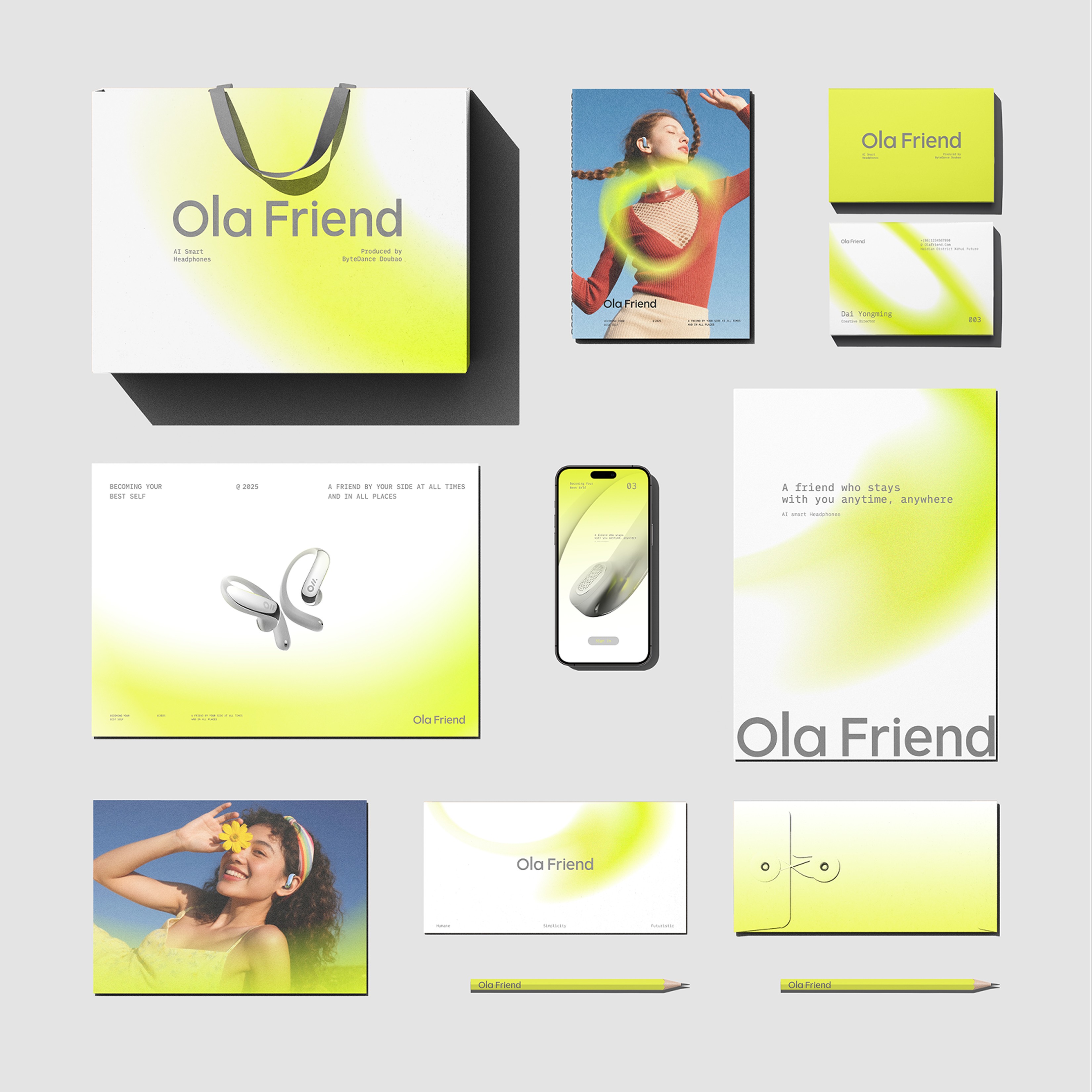
Under this judgment, color also became an important tool for expressing the product's emotion and personality. We chose a fluorescent yellow, not to create visual stimulation, but to give the role of “friend” a clearer emotional direction.
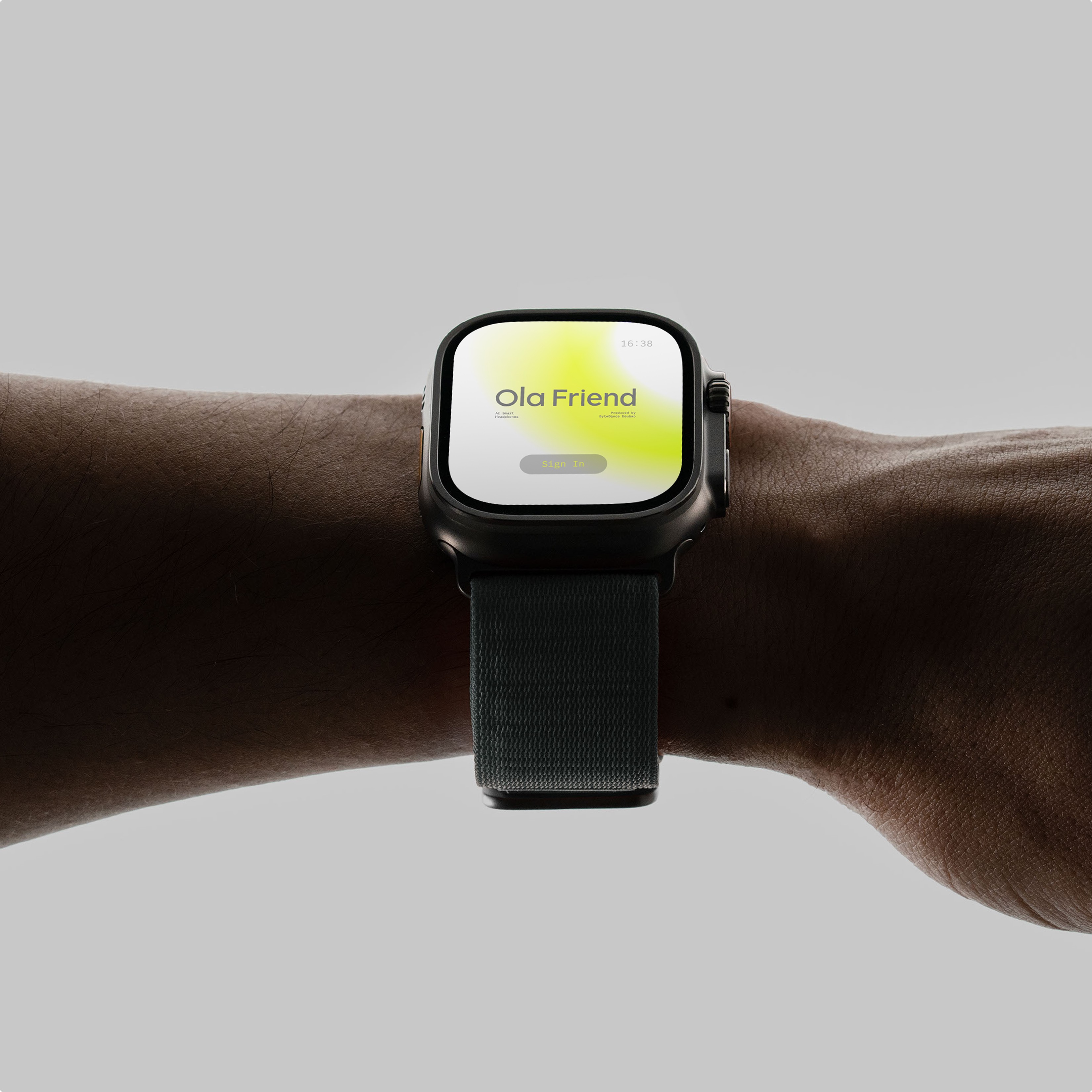
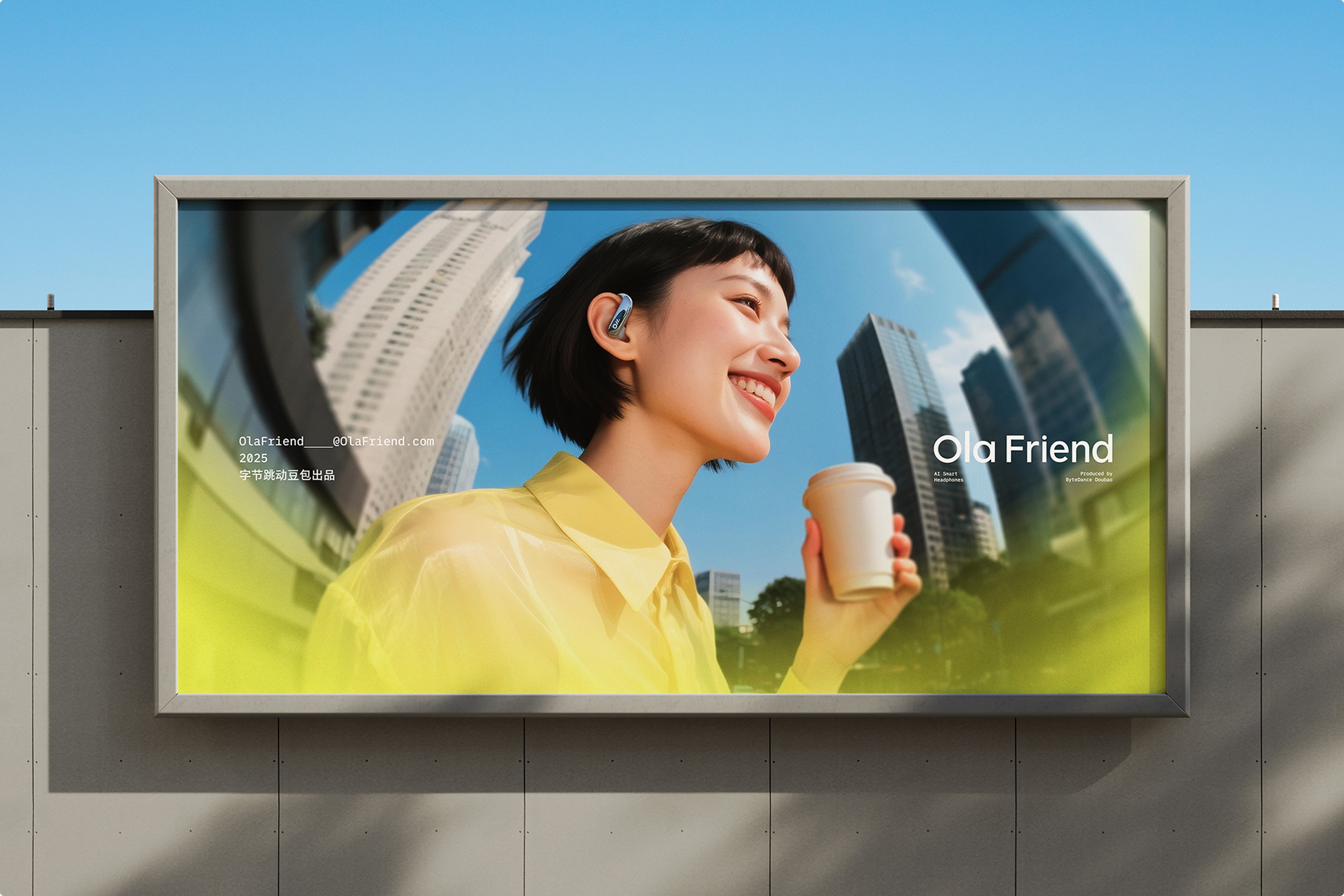
In our vision, a friend should have emotion, but not in an ostentatious way; it should be positive, upbeat, and trustworthy. At the same time, as an AI product, it also needs to be perceived as “smart” — sensitive to the environment and responsive to the user. That is why fluorescent color was introduced: it establishes a balance between warmth and rationality, retaining a touch of technology without feeling cold.
More specifically, we do not understand this color as a “color block,” but as a carrier of “light.” Light here is not decoration, but a metaphor: it surrounds you, responds to your movements, and symbolizes companionship, embrace, and continuous presence. Compared with a concrete form, light is closer to the true state of AI in everyday life — it does not demand attention, yet is always there.
Through this approach, the product's visual language is no longer just a choice of appearance, but becomes a clue for users to understand AI: it is not an imperative tool, but a presence nearby, trustworthy, and capable of communication.
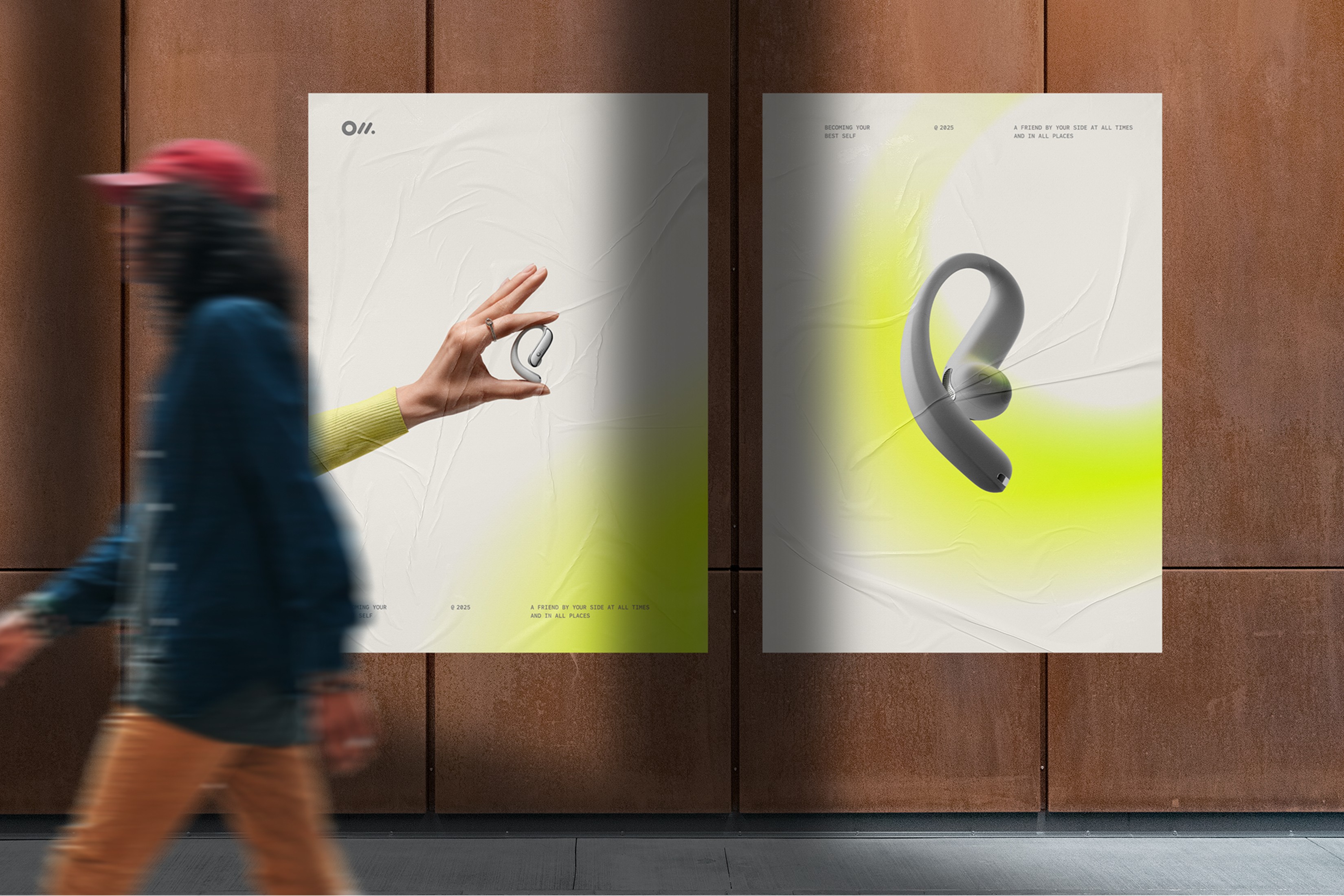
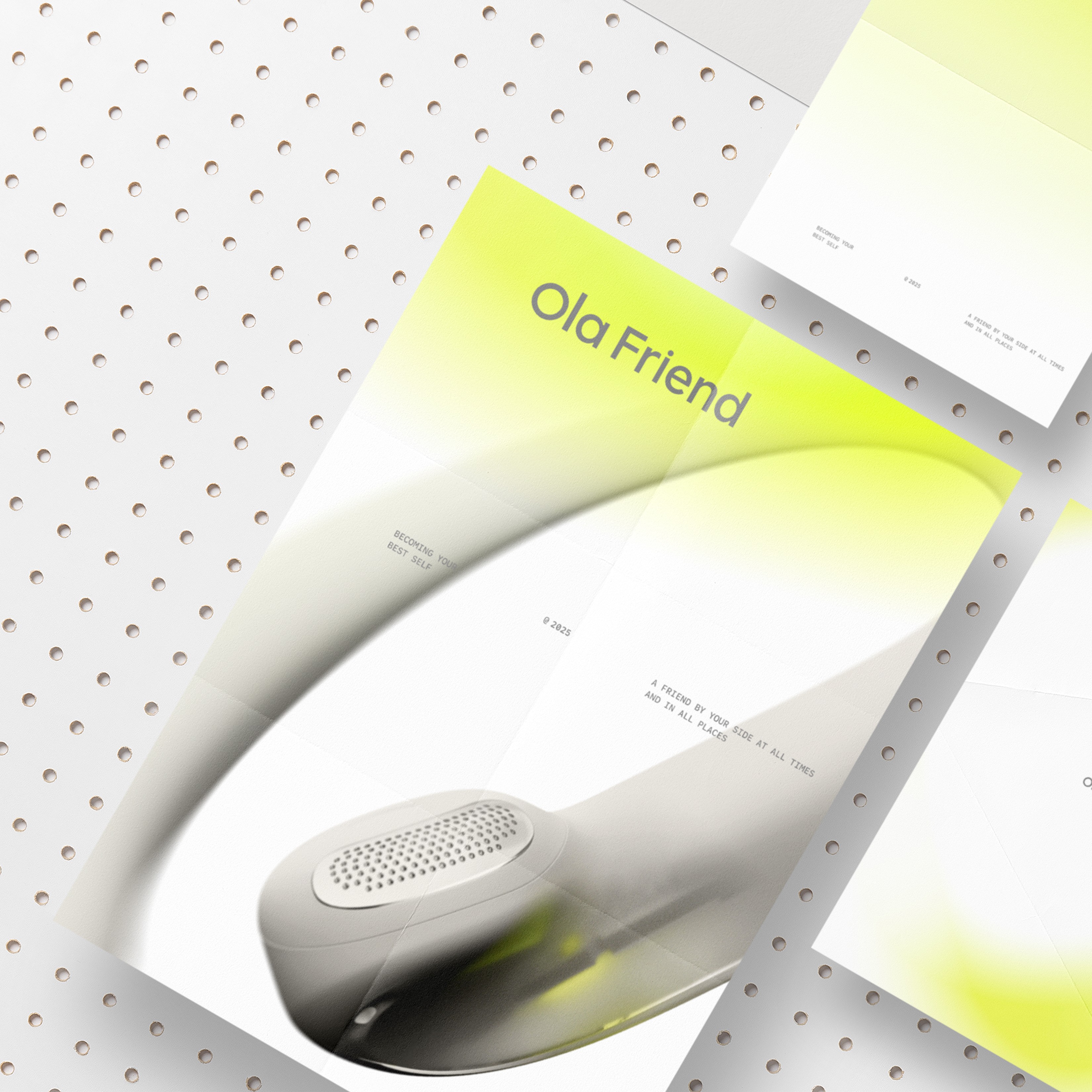
At this stage, the role of the brand is not just packaging or communication; it genuinely helps the product define itself. Through consistency in language, interaction tone, and the overall experience, it becomes an important clue for users to understand the product.
Finally, I’d like to share another piece centered on butterflies, imagination, moving toward something, and companionship (although we ultimately did not take it to market), because as the starting point for our thinking about the Ola Friend brand, it seems to better explain our imagination and expectations for this new product.
Everyday scenarios
Create authentic scenarios that fit the user's lifestyle, showing the product's use in relevant environments in a more natural way.
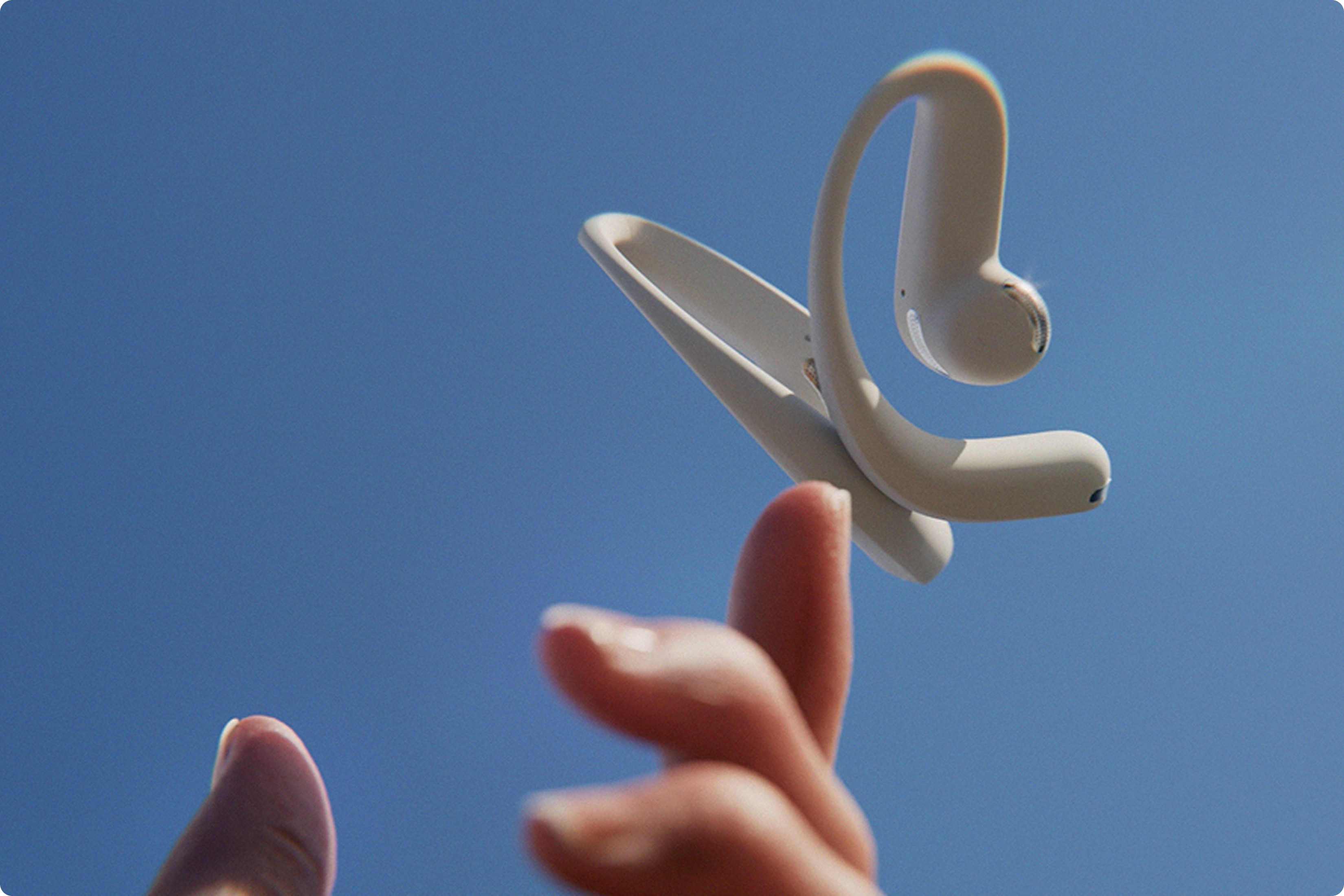
The value of Ola Friend is not that it provides a final answer, but that through this round of exploration, it clarifies one thing: in AI products, brand and experience are not outcome-based tasks, but key tools that participate in early judgment.
Only when the product's role is clearly defined can the subsequent design, iteration, and expression maintain a sense of direction in a changing technical environment.